A speculative design project raising awareness for the rising dangers and urgency of microplastics in Dutch waters with the goal of policy change in the Netherlands.
Introduction
This is a speculative + dystopian e-commerce project in response to the microplastics crisis affecting Dutch canals.
The brief was to tackle the problem of microplastics in Dutch canals with the goal of creating a provocative prototype in order to trigger some conversation regarding policy change.
Client
Waternet NL
Project
Masters Project (Hogeschool van Amsterdam)
Team
Laura Klimaite, Nicole de Haan, Nathalie Hosari
year
2022
research + strategy
There are no policies being implemented to tackle the microplastics issue on a legality level, even though the issue is extremely urgent.
Waternet wanted us to create a project that would be able to stir a level of conversation, enough to create awareness with concerned citizens, and ultimately influence policy change on the longer term.
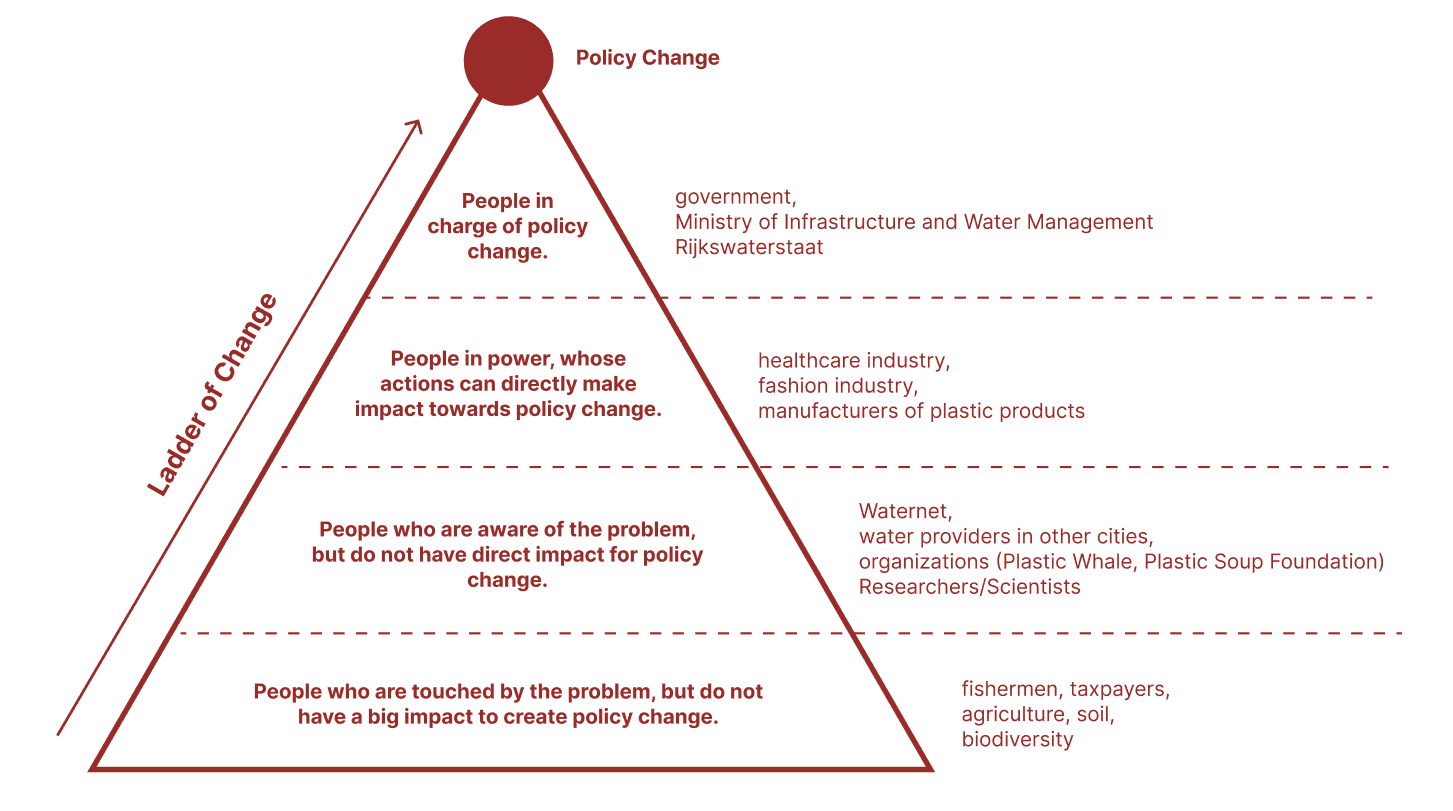
Our Ladder of Change is a list of stakeholders affecting and being affected by the microplastics crisis. It’s also a list of the level of influence each stakeholder has on the end goal.
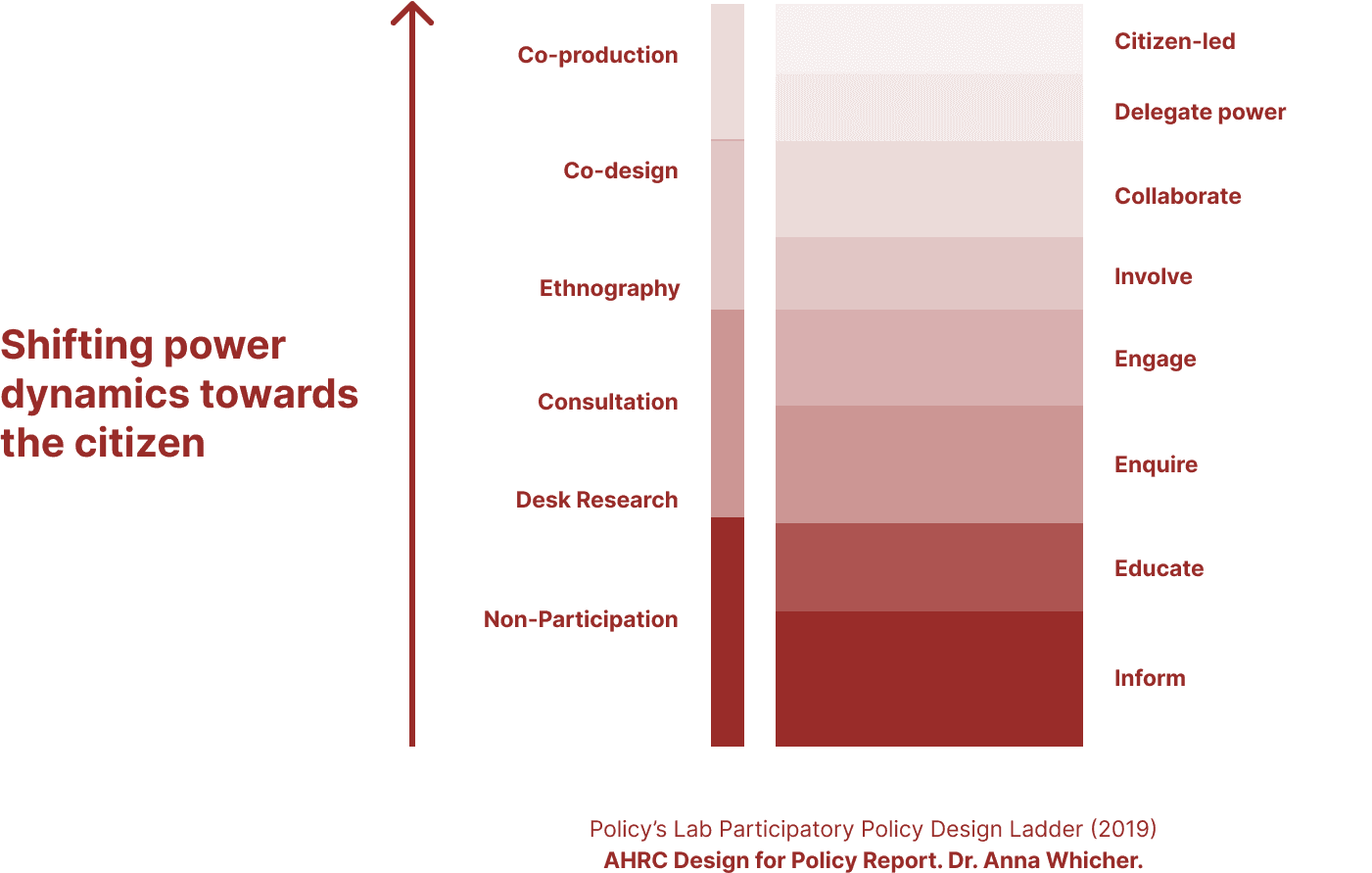
We aimed to shift the power dynamics towards the citizen by informing and educating them enough to get them to start enquiring, engaging and then eventually taking actions that are self-initiated.
Our strategy was heavily influenced by the Policy Co-Design Playbook by OpenResearch Amsterdam.
The stakeholders involved were particularly challenging as there was a rift when it came to levels of people working at Waternet.
We were in discussion with people from middle management who were classified as lesser stakeholders, as they are not the ones taking direct action towards policies. However, the upper management employees were the ones influencing bigger, more impactful decisions that have more power in relation to policy change.
artifacts
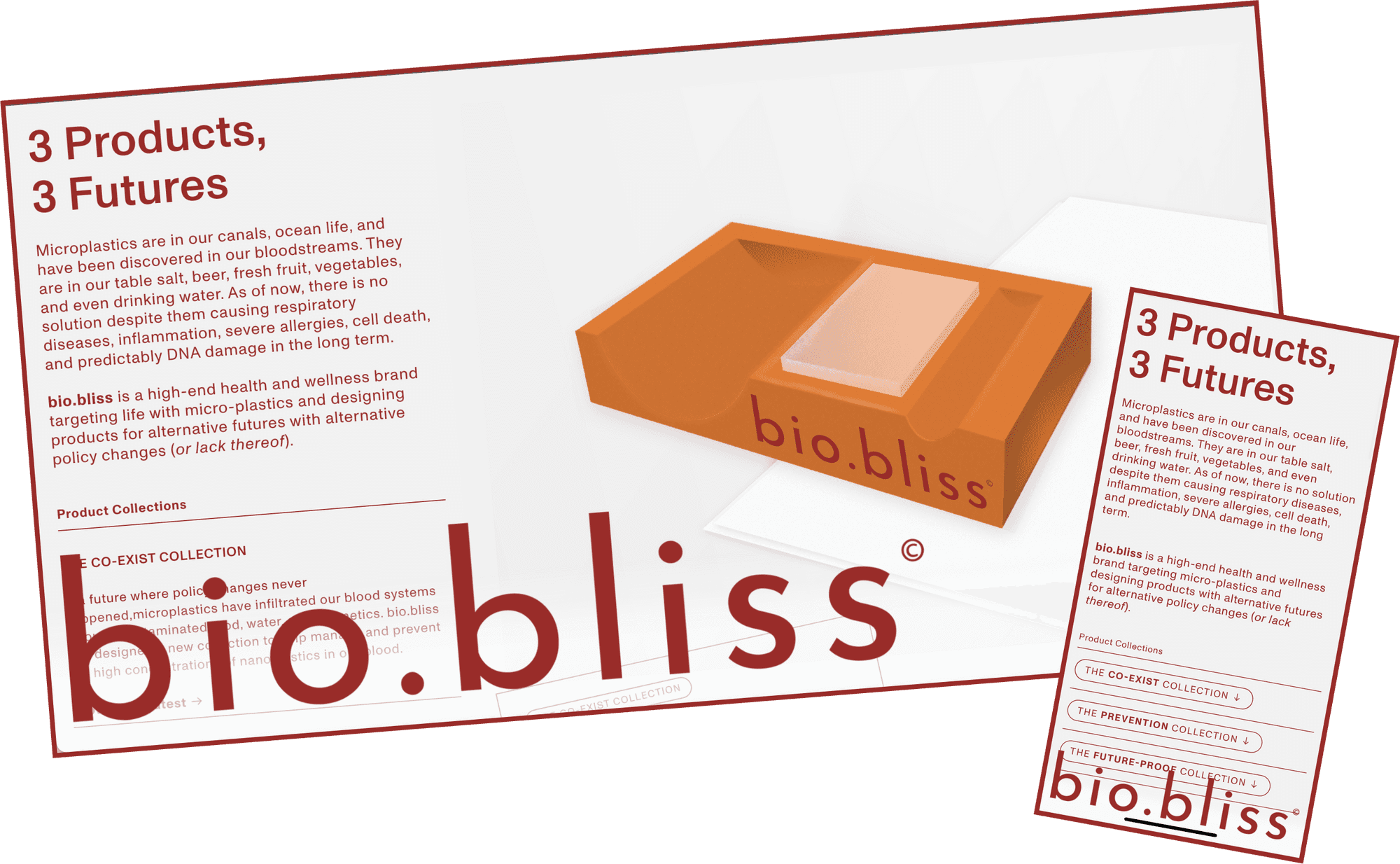
We created BioBliss, a fake high-end wellness company creating treatments and cosmetics for a highly-commodified future for living with microplastics, and where only those who can afford it can survive.
a minimal logo + AI-generated slogan, heavily inspired by pseudoscientific brands such as Goop.
Alongside the brand, we created a set of 3 speculative products designed for 3 alternative futures, known as material speculation artefacts.
We wanted to create a project dystopian and shocking enough so that it was bound to stir up conversation in light of the importance of this policy change.
Each future imagines a world where a different policy tackling micro-plastics has been implemented, and the consequences of this policy change are observed in a commodified economy.
We wanted to create a project dystopian and shocking enough so that it was bound to stir up conversation in light of the importance of policy change.
1.
the future
Microplastics have infiltrated our blood systems through contaminated food, water, and cosmetics. bio.bliss has designed a new collection to help detect the high concentrations of nanoplastics in our blood.
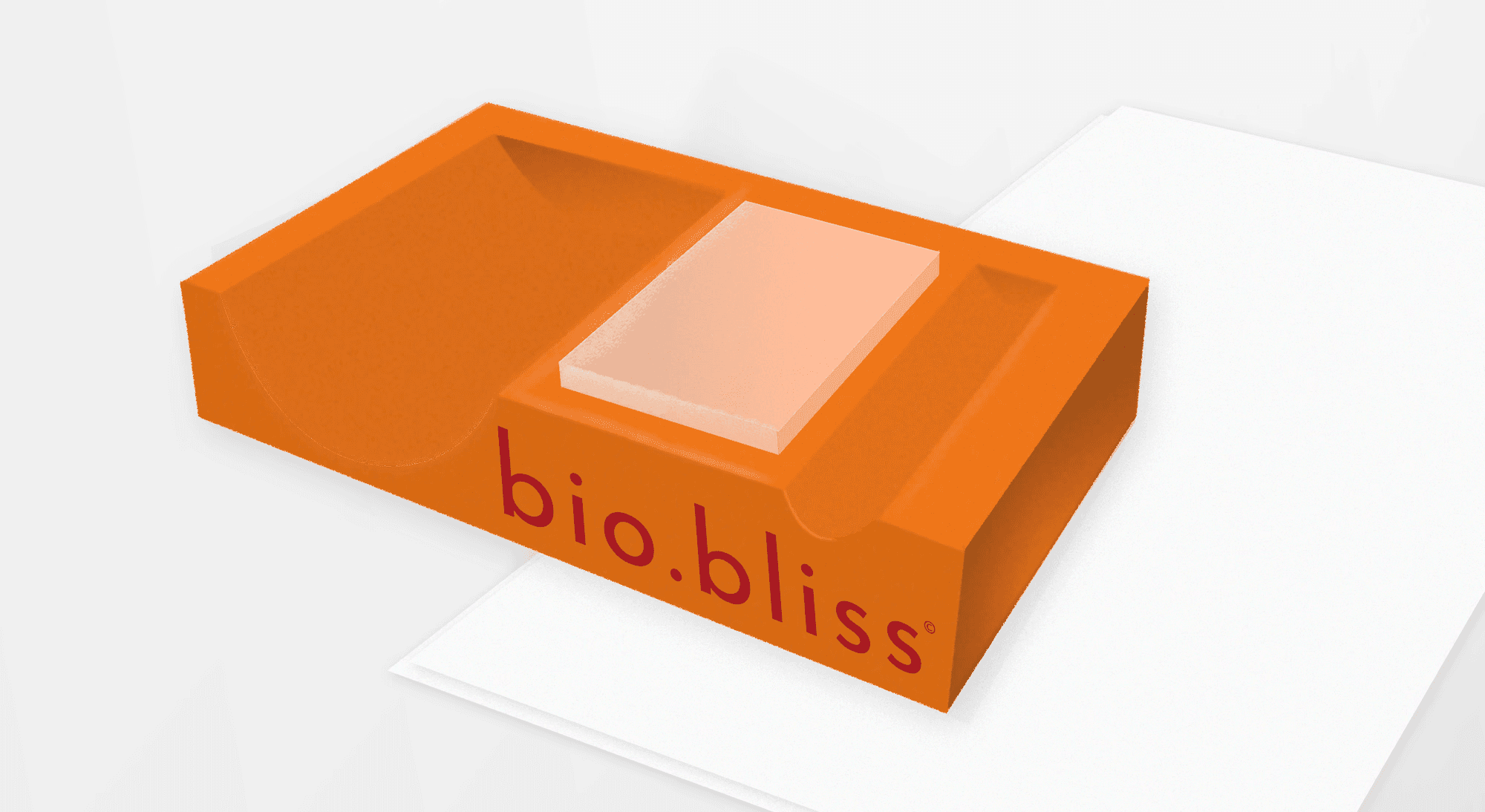
The product
The Nano-plastic Fingerprick Analyzer uses state-of-the-art technology to accurately detect the presence of nanoplastics in just a few simple steps.
2.
The future
Microplastics are still everywhere, we're just trying to limit and prevent more from entering our blood streams. bio.bliss has designed a product with the latest Bethnic technology to purify food and water from microplastics.
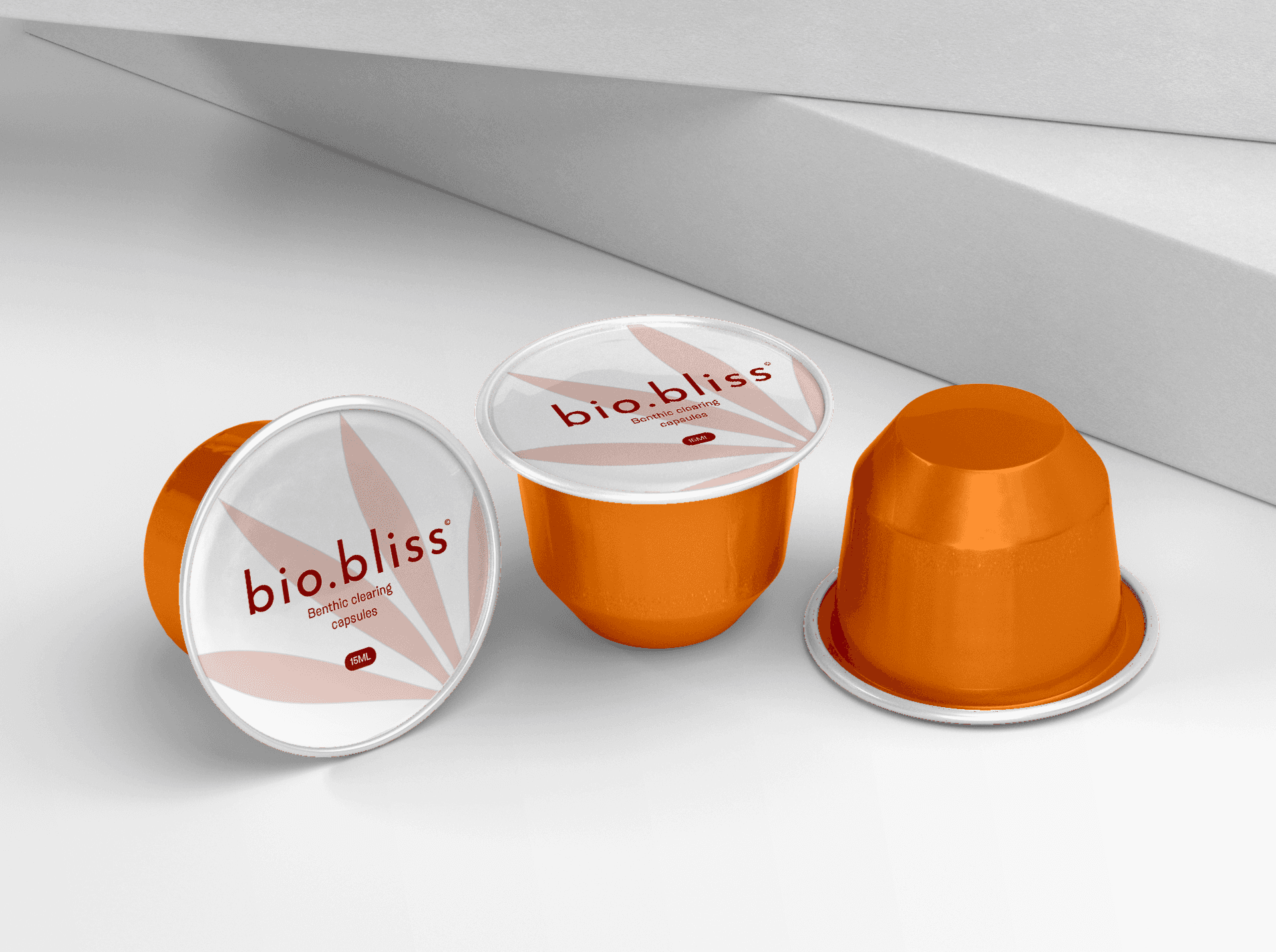
The product
A pack of 3 liquid capsules containing natural zooplankton to effectively filter out harmful micro-plastics, ensuring that meals and beverages are as pure and clean as they can be.
3.
The future
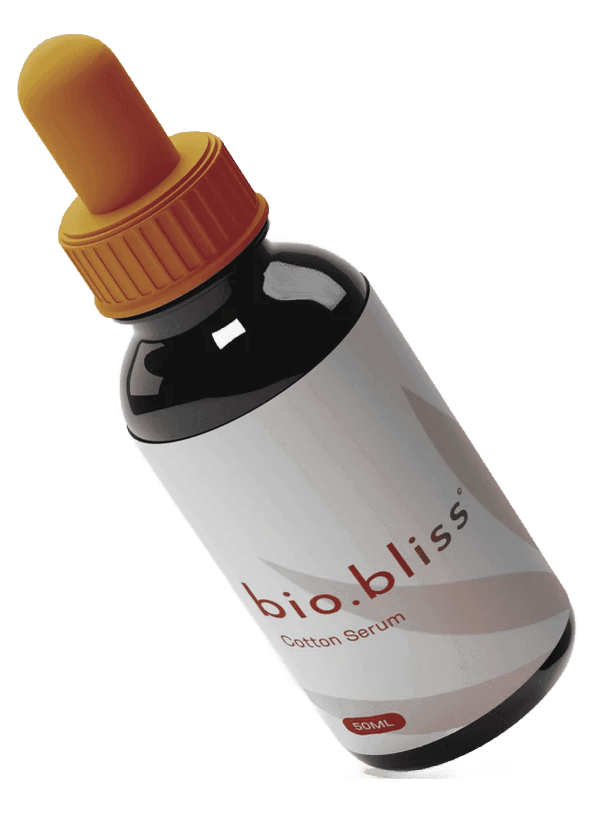
Fast fashion and cheap polyester products are dead. bio.bliss has designed solutions to grow your own accelerated raw material at home.
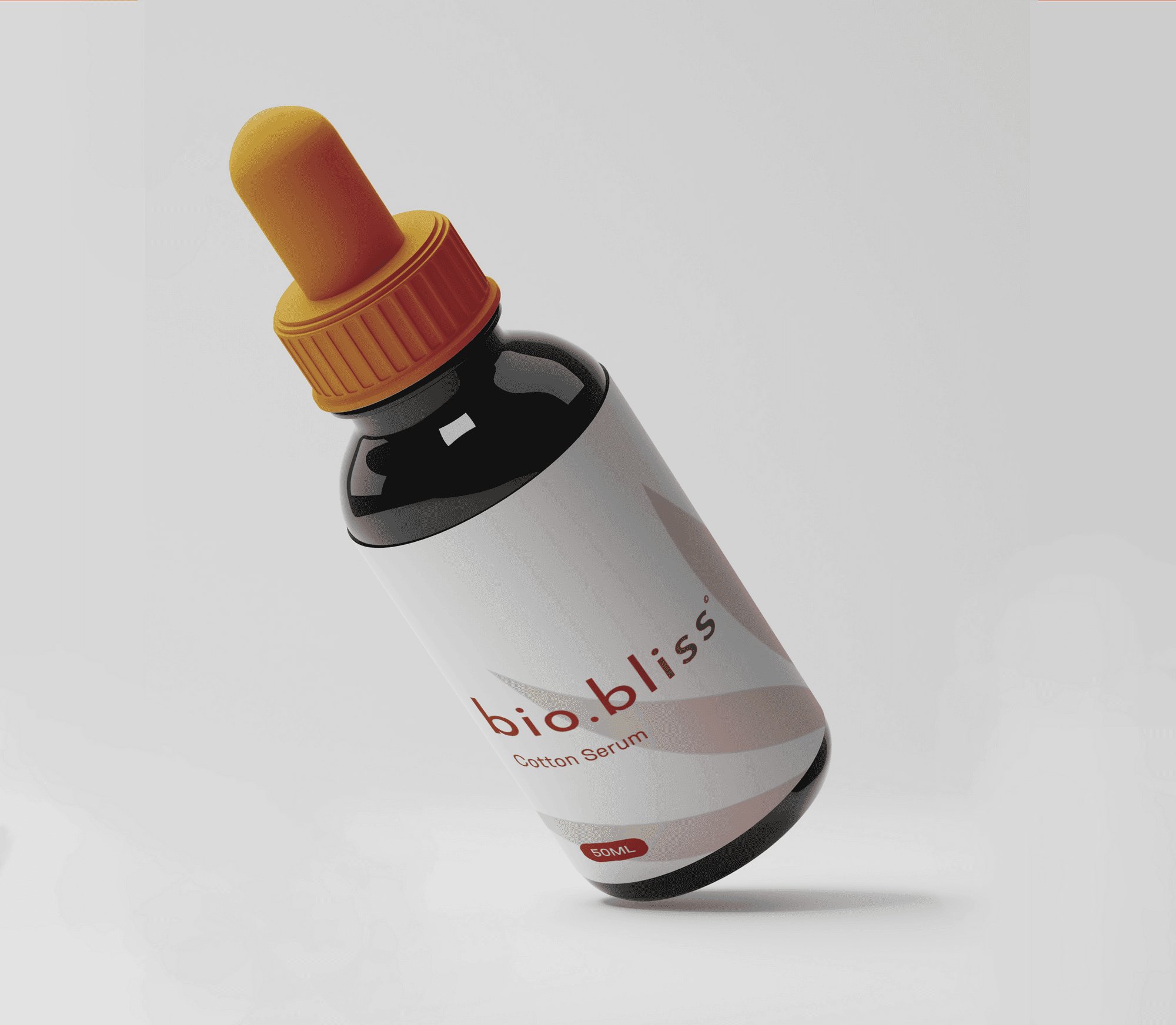
The product
This unique and innovative serum is specifically formulated to help you grow your own cotton with ease, speed, and success. The Cotton Serum is made from a blend of hand-selected nutrients and growth factors that are essential for healthy cotton development to help you grow your own fabric and clothes.
website
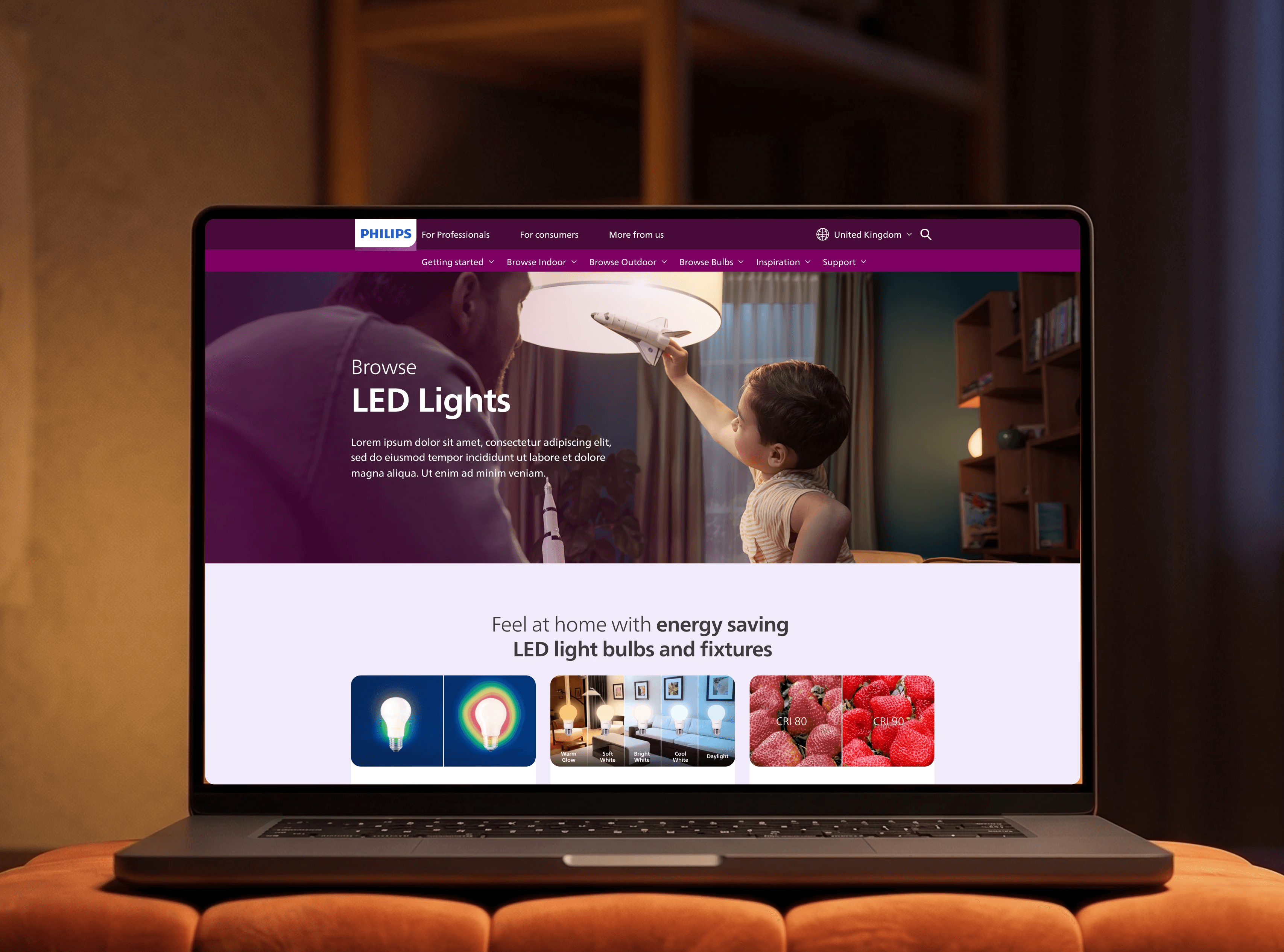
I designed and developed a faux ecommerce platform so shoppers can learn more about the products. As the users scroll and shop for the products, they will be faced with a message shifting them back to the reality of now.
The project was displayed at the Master Digital Design 2023 final exhibition and was met with some surprise. Initial reactions were that most visitors were shocked at the high prices for the products, and couldn’t imagine purchasing them in real life. The shock factor was realized even further when visitors tried to imagine a future where these “luxury items” were to become a necessity, as is the case with many medicine nowadays such as insulin.
Some of the participants we had initially tested our concept validations on gave us feedback on how they think of microplastics now more often than they used to as a result of our project.
For now, the project simply redirects to the Plastic Soup foundation where users can take initiative into educating themselves on microplastics issues. The team and I have ambitions in producing the actual 3 products and selling them as tokens of what could be the reality in the future.